
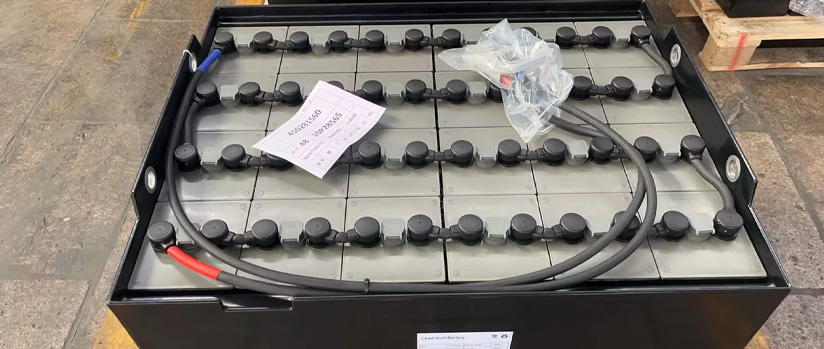
Les batteries au plomb sont largement utilisées dans les chariots élévateurs, les transpalettes, les systèmes d'alimentation de secours et autres équipements industriels. Un processus de décharge correct est essentiel pour maintenir des performances optimales, prolonger leur durée de vie et garantir la sécurité.
Que signifie le terme « décharge » pour une batterie au plomb-acide ?
La décharge consiste simplement à utiliser l'énergie stockée dans la batterie pour alimenter votre équipement. Chaque fois que votre chariot élévateur ou votre transpalette fonctionne, la batterie se décharge.
La décharge contrôlée vous offre : Tension stable, Production d'énergie efficace, Moins de dommages internes aux plaques de la batterie.
Profondeur de déversement recommandée (DoD)
L'une des règles les plus importantes concernant les batteries au plomb-acide : éviter la décharge excessive.
Recommandations : Maintenez la profondeur de décharge entre 50 % et 80 %. Évitez de laisser l’état de charge (SOC) descendre en dessous de 20 %.
La décharge profonde entraîne : Sulfatation de la plaque, Perte de capacité, Autonomie de la batterie réduite.
Comment décharger correctement les batteries au plomb-acide
1. Utiliser l'équipement dans les limites de sa charge nominale
Déchargez toujours la batterie en utilisant votre équipement dans des conditions normales d'utilisation. Évitez de brancher des charges incompatibles : un courant de décharge instable peut endommager la batterie.
2. Maintenir un courant de décharge constant.
Les décharges soudaines à courant élevé provoquent :
La température interne va augmenter
Corrosion plus rapide des plaques
efficacité réduite
Conseil : Utilisez des contrôleurs et des moteurs compatibles pour maintenir un courant stable pendant le fonctionnement.
3. Ne pas décharger complètement
Décharger complètement une batterie au plomb-acide jusqu'à 0 % est l'un des moyens les plus rapides de la détruire.
Pourquoi est-ce mauvais ?
Provoque une sulfatation irréversible
Rend la recharge difficile
Réduit définitivement la capacité
Nous vous recommandons d'utiliser votre batterie avec un chargeur intelligent qui empêche les décharges profondes et optimise les cycles de charge.
4. Rechargez immédiatement après la décharge
Les batteries au plomb-acide ne doivent pas rester déchargées.
Meilleures pratiques :
Facturez après chaque quart de travail
Ne stockez pas la batterie lorsqu'elle est faiblement chargée.
Retarder la charge peut entraîner une sulfatation et une baisse d'efficacité.
Conseils de sécurité lors du déchargement
La manipulation des batteries au plomb-acide nécessite des précautions :
Veillez à bien ventiler la zone pour éviter l'accumulation de gaz.
Éviter les courts-circuits ou le contact direct entre les bornes.
Tenir les piles à l'écart des sources de chaleur excessive. Vérifiez régulièrement les câbles et les connecteurs.
Pourquoi une décharge appropriée est importante
Bien gérer sa sortie d'hôpital apporte de réels avantages :
Autonomie de la batterie prolongée
Performances stables de l'équipement
coûts d'entretien réduits
Fonctionnement plus sûr
Pour les entreprises qui dépendent des équipements de manutention, une bonne gestion des batteries a un impact direct sur la productivité et la rentabilité. Nous vendons des produits industriels de haute qualité. batteries au plomb-acide , chargeurs compatibles et accessoires en gros Performances fiables, prix compétitifs, solide expérience à l'export et livraison rapide : nous fournissons des solutions d'alimentation fiables pour chariots élévateurs et transpalettes aux distributeurs et grossistes du monde entier.
Conclusion
Bien décharger une batterie au plomb-acide ne se limite pas à utiliser l'énergie stockée ; il s'agit aussi de protéger votre investissement. En contrôlant la profondeur de décharge, en évitant les décharges complètes et en rechargeant rapidement, vous pouvez prolonger considérablement la durée de vie de la batterie et garantir le bon fonctionnement de vos opérations. Contactez-nous pour des conseils pratiques et des solutions de batteries haute performance conçues pour votre équipement.
Obtenez les dernières offres de HUAN XIN Mécanique et Électrique


Envoyez-nous un e-mail
E-mail : simon@lifttops.com
Adresse


 IPv6 réseau pris en charge


 français
 français
 English
 русский
 español
 português
 العربية